

Sun, electricity and education: ITB is digitising schools in Kenya
The Institute of Technology and Education is breaking down structural barriers in international vocational education and training: the aim is to equip schools in the rural Kenyan region of Homa Bay for digital teaching and practical learning.
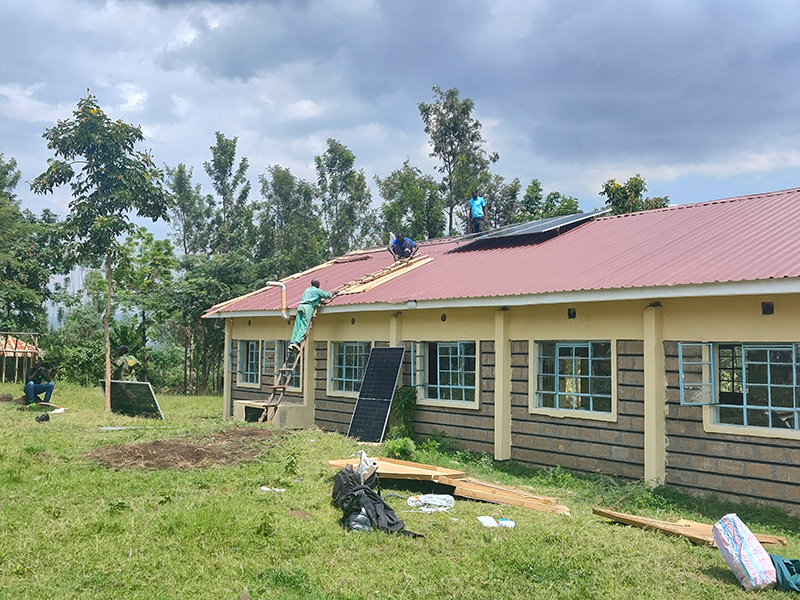
First the infrastructure, then the teaching methods
In many rural regions of Kenya, modern education fails at the grassroots level: there is a lack of reliable electricity and digital equipment. The ITB and its partners solved this problem through a three-stage transfer approach:
Infrastructure as the foundation: Three secondary schools with vocational training classes were directly equipped with photovoltaic systems and innovative, energy-efficient IT devices. Africa’s sun thus provides the electricity for the digital transformation on the ground.
Developing teaching skills: Technical equipment alone does not guarantee learning success. The ITB contributed its expertise to train local teachers in the fundamentals of teaching. The teachers learnt to create digital teaching materials themselves and to use them flexibly in the classroom.
Work-process-oriented learning: To prepare young people optimally for the labour market, the project focuses on so-called learning and work tasks. These tasks build a bridge to local industry, even when direct access to businesses in the region is severely limited.
The added value
This project impressively demonstrates how scientific findings from vocational education and training research in Bremen are shaping global development cooperation. The transfer of knowledge from DEVISE4KE directly links environmental sustainability (solar energy) with social inclusion (digital education). Young people in resource-poor regions are thus given the opportunity to acquire up-to-date professional skills that are crucial for their future careers.
Vivian Haberts & Peter Kaune