

This text was machine-translated.
Department
Prof. Dr. Dr. h.c. Michael Gessler
Head: Prof. Dr. Dr. h.c. Michael Gessler
Deputy: Dr. Daniela Ahrens
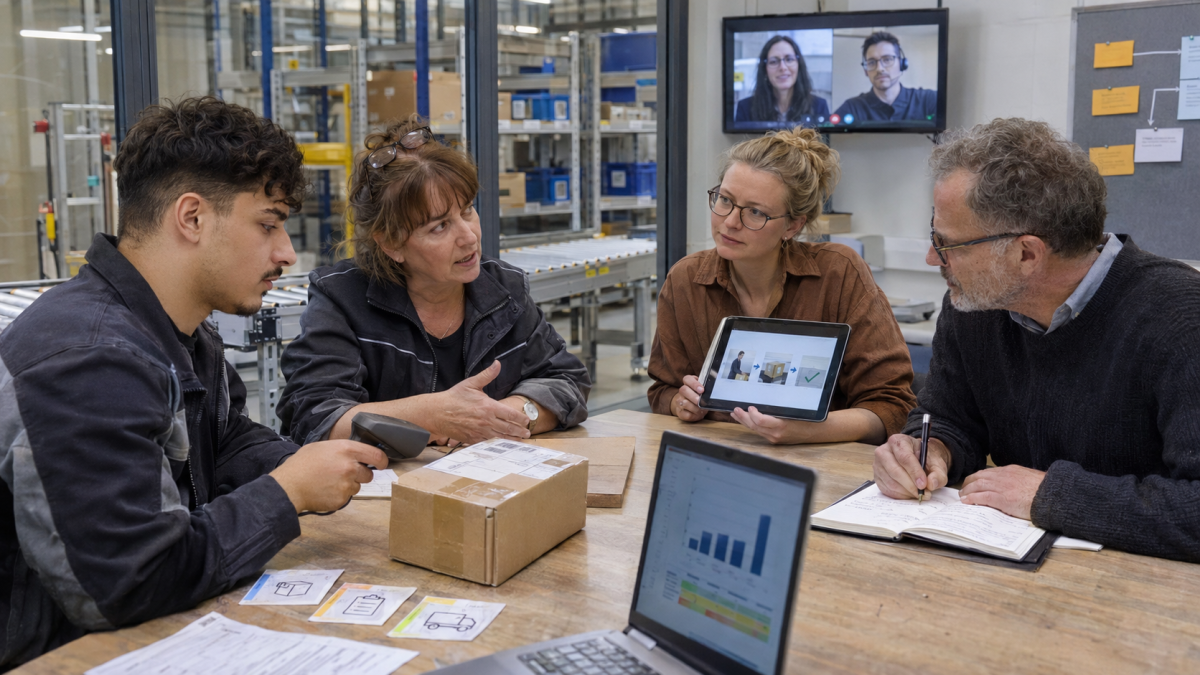
The department’s work is based on a combination of a design-oriented approach and an evidence-based approach, with a focus on vocational training and continuing vocational development. The department’s key research areas are: (1) research into vocational competence, (2) work-based learning and learning in the workplace, (3) the digitalisation of work and learning, and (4) the internationalisation of vocational education and training.
Staff
-
 Dr. Daniela Ahrens Postdoctoral Researcher, Deputy Department Head,
-
 Graham Attwell Guest Researcher
-
 Dr. Ludger Deitmer Guest Researcher
-
 Prof. Dr. Dr. h.c. Michael Gessler Head of Department, Chairperson
-
 Frieda Klaus Research Associate
-
 Dr. Kristina Kühn Postdoctoral Researcher
-
 Dr. Lisa Meyne Postdoctoral Researcher
-
 Prof. Dr. Martin Mulder Guest Researcher
-
 PD Dr. Susanne Peters Postdoctoral Researcher
-
Sophia Roppertz Research Associate
-
 Dr. Andreas Sebe-Opfermann Postdoctoral Researcher
-
 Dr. Christine Siemer Postdoctoral Researcher
-
 Dr. Janis Vossiek Guest Researcher
Projects
-
2026–2029
GEKKO – Innovative approaches to logistics design to enhance the skills of continuing professional development mentors
The project ‘Innovative Approaches in Logistics to Foster the Competence of Continuing Professional Development Mentors’ (GEKKO) is funded under the guidelines for supporting projects aimed at enhancing and strengthening work-related continuing professional development through the training and establishment of continuing professional development mentors. GEKKO aims to train continuing professional development mentors (CPD mentors) within the context of small and medium-sized logistics enterprises (SMEs) and to establish them at company level.
Dr. Christine Siemer Frieda Klaus Prof. Dr. Dr. h.c. Michael Gessler
-
2026
BLP Mechtronik – BLP Industrial Mechatronics: Advancing TVET in Namibia through the Introduction of an Industrial Mechatronics Qualification
The GIZ project supports the introduction of a practice-oriented, competency-based qualification in industrial mechatronics in Namibia. Working with Namibian vocational training centres and the Namibia University of Science and Technology, the Institute Technology and Education at the University of Bremen has trained teachers and developed curricula and teaching materials. The professional development programme combined short courses, online training and mentoring with action-based learning. The aim is to establish the programme as a lasting part of Namibia’s vocational education and training system and broaden career opportunities in technical occupations. The project is funded by BMZ through the German Government and Federal States Programme and co-financed by the federal state of Bremen.
-
2025–2027
Karrieren@Stahl – Careers@Steel – Career models and professional development pathways to secure and develop skilled workers in the steel industry
The research project ‘Karrieren@Stahl – Career models and professional development pathways for securing and developing skilled labour in the steel industry’ aims to address the changing qualification and skills requirements in the steel and foundry industries.
PD Dr. Susanne Peters Frieda Klaus Dr. Lisa Meyne Michael Sander Alexander Seedorf Prof. Dr. Dr. h.c. Michael Gessler
-
2024–2026
NaLoGO – Sustainability in logistics, taking the design and organisation of supply chains and e-mobility as examples
On 1 June 2024, the NaLoGO collaborative project was launched as part of the funding programme ‘Sustainable Careers – Future-Oriented Training’, with a duration of 24 months. The project is funded by the BMBF and co-financed by the European Social Fund Plus. NaLoGO aims to develop sustainability-related skills among training staff.
Dr. Daniela Ahrens Svenja Gmeinder Prof. Dr. Dr. h.c. Michael Gessler
-
2024–2025
BLP Green Energy – Strengthening vocational training for the green energy sector in Namibia
The project “BLP Green Energy Namibia” supports the development of Namibia’s vocational education and training system for an emerging green hydrogen economy and other industrial sectors. In 2025, the Institute Technology and Education (ITB) at the University of Bremen, together with the Namibia Training Authority, developed the occupational profile “Industrial Mechatronics” for Levels 2 to 4 of the national qualifications framework. It integrates electrical engineering, mechanics, automation and information technology. A complementary qualitative study involving 47 women examined career choices, training conditions and barriers to entering technical occupations, informing recommendations on career guidance, equal opportunities and transitions into employment. The results provide a foundation for the profile’s phased introduction and trainer development.
Jan Naumann Dr. Kristina Kühn Nils Petermann PD Dr. Susanne Peters Prof. Dr. Dr. h.c. Michael Gessler
-
2023–2026
SKILLS4JUSTICE – Skills Partnerships for Sustainable and Just Migration Patterns
The issue: Many countries are experiencing, or are seeing a rise in, skills shortages, including in the IT sector, the care sector and the skilled trades. At the same time, there are both regular and irregular migration flows. Irregular migration results in significant disadvantages for those affected in terms of access to the labour market, which is not legally possible; however, regular labour migration also presents challenges for all stakeholders.
Dr. Kristina Kühn Frieda Klaus Dr. Andreas Saniter Prof. Dr. Dr. h.c. Michael Gessler
-
2023–2025
AI Pioneers – AI and the future of education
Problem statement: The transformative power of artificial intelligence (AI) extends across various sectors, including education; however, it is still unclear exactly what impact AI will have on learning, teaching and (European) policy.
Dr. Lisa Meyne Dr. Ludger Deitmer Frieda Klaus Dr. Christine Siemer Prof. Dr. Dr. h.c. Michael Gessler
-
2022–2024
WBV-HB – Bremen Automotive Industry Further Training Network
Against the backdrop of the challenges posed by the transformation of companies in the automotive industry in the state of Bremen and the surrounding area, the continuing education network aims to promote and coordinate a regional range of continuing education programmes that meet the skills requirements of companies as they shape this transformation and contribute to the strategic development of a skilled workforce tailored to these needs.
PD Dr. Susanne Peters Daniel Weerts Prof. Dr. Dr. h.c. Michael Gessler
-
2021–2024
SmaLo – Smart Learning in Logistics
The issue: In the logistics sector in particular, we are seeing the simultaneous occurrence of advancing digitalisation – with the associated risks of job displacement – and low participation in further training. Whilst the need for learning is undisputed, it is difficult to develop continuing professional development programmes in such a way that they address both organisational and career-related perspectives in equal measure.
Dr. Daniela Ahrens Sophia Roppertz Dr. Christine Siemer Prof. Dr. Dr. h.c. Michael Gessler
-
2021–2022
Opportunities and Obstacles for German Family Businesses: Dual Apprenticeship and Continuing Vocational Education and Training in Central and Eastern Europe
On behalf of the Family Business Foundation, seven Central and Eastern European countries of strategic importance to Germany (Bulgaria, Poland, Romania, the Czech Republic, Serbia, Slovakia, and Hungary) were analyzed with regard to the vocational training initiatives of German family-owned businesses in these countries. Since the dual vocational training system—which has proven successful in Germany—is hardly established in these regions, companies often face significant bureaucratic hurdles and a lack of government infrastructure when training their employees. The study shows that family-owned businesses are already establishing their own educational structures through tremendous initiative and significant financial investment. To ensure long-term regional competitiveness, the project provides concrete recommendations for closer, systematic cooperation between local policymakers, vocational schools, and the business community.
-
2020–2023
IDC-VET – Improving the Digital Skills of VET Teachers and Trainers
The use of technology can support learning in the workplace and in vocational schools, for example through the development of up-to-date and engaging learning materials. In order to realise these technological benefits, teachers and trainers in vocational education and training must develop new skills and competences.
Dr. Lisa Meyne PD Dr. Susanne Peters Prof. Dr. Dr. h.c. Michael Gessler
-
2019–2023
MP-INVET – Meta-project on research into the internationalisation of vocational education and training
Problem statement: International research in the field of vocational education and training is generally conducted on a disciplinary basis. This results in fragmentation, which makes it difficult to systematically link different research findings and to realise their full potential for international cooperation in vocational education and training. Objective: There is an urgent need to better link up and make accessible the expertise of research institutions in the field of international vocational education and training. The conceptualisation of a sustainable inter- and transdisciplinary research network, which brings together the findings of all stakeholders in vocational education and training, is intended to make this possible.
Dr. Anja-Christina Greppmair Prof. Dr. Dr. h.c. Michael Gessler
-
2019–2021
Taccle AI – Improving skills and competences of VET teachers and trainers in the age of artificial intelligence
Young people urgently need new knowledge and skills relating to AI to participate effectively in vocational training and the world of work. Targeted continuing development for teachers and trainers is essential to prepare them for this task and enable new teaching and learning arrangements in different settings.
Sophia Roppertz Dr. Ludger Deitmer PD Dr. Susanne Peters Prof. Dr. Dr. h.c. Michael Gessler
-
2019–2020
Strengthening of training capacities for state and private vocational training providers in Namibia combined with a recognised international certification for trainers in selected specialist areas
From March 2019 to February 2020, the project strengthened the technical and pedagogical competencies of trainers working for public and private vocational training providers in Namibia. The Institute Technology and Education (ITB) at the University of Bremen and Uni Bremen Campus GmbH, in cooperation with GIZ, developed two certificate programmes in electrical engineering and plumbing, each comprising 480 learning hours. Of 30 participants, 27 received a university certificate, including six who achieved “Master Trainer” status. Two additional training courses addressed automotive technology. Practical learning and work assignments, supported transfer phases and teaching materials facilitated application in vocational training. Preparations were made for recognition of the certificates in Namibia.
-
2018–2020
Taccle VET – Extend European Framework for the Digital Competence of Educators for VET Teachers and Trainers
Problem statement: The European Research Council has issued a framework, DigCompEdu (JRC, Redecker and Punie, 2017), recommending how EU teachers of general subjects should use digital media in teaching. The Joint Research Council report lacks a perspective on the particular characteristics of VET that would enable targeted recommendations for vocational school teachers and trainers. This project aims to close that gap. Objectives: TACCLE VET aims to extend the European framework for developing digital competences to vocational training. Research question: Expert interviews explore the implications of digital transformation for teaching and learning in four occupational sectors (construction, agriculture, tourism and wellness), focusing on the distinctive features of VET.
Dr. Ludger Deitmer Pekka Kämäräinen Prof. Dr. Dr. h.c. Michael Gessler
-
2018–2019
Developing vocational education and training research in Namibia
Problem statement: Namibia is one of the countries with very high inequality and very high youth unemployment of over 50%. The National Development Plan (NDP5) names the improvement of vocational training structures as the central instrument for reducing inequality, enabling employment and strengthening the local economy. However, knowledge about the strengths, weaknesses and development needs of the VET system is very limited, as there is no established VET research. Objectives: The project aims to build structures for developing expertise in Namibia.
-
2018–2019
SOKO 3D – Social competences in the 3D printer training project
Increasing workplace demands arising from digitalisation and new forms of work organisation – teams with mixed qualifications, flatter hierarchies, virtual working groups and decentralised decision-making – make social competences key enablers for the future. In tomorrow's workplace, particularly in mechanical and plant engineering, interdisciplinary cooperation across occupational fields and work in heterogeneous teams with mixed qualifications will become everyday activities.
Dr. Daniela Ahrens Dr. Antje Handelmann Prof. Dr. Dr. h.c. Michael Gessler
-
2018
ECER-Toolbox – Supporting hybrid presentations, hybrid posters and ePosters with the help of ECER-Toolbox
The Learning Layers project (EU FP7), completed in 2017, developed and introduced the Learning Toolbox (LTB), with ITB involvement, as a digital toolkit for work-process-related learning. Its developers subsequently adapted it for presenting e-posters at conferences. These applications were piloted at two European conferences, AMEE and ECTEL, in 2017.
Dr. Ludger Deitmer Dr. Lars Heinemann Pekka Kämäräinen Werner Müller Prof. Dr. Dr. h.c. Michael Gessler
-
2018–2022
wb-ibb – Research support for the BMBF funding programme “Internationalisation of VET”
Problem statement: Germany has a well-established vocational education and training system. Internationally, the ‘dual system’ in particular is held in high regard and serves as a model for national reform processes, as it supports the achievement of various objectives (including low youth unemployment, high productivity and high levels of social integration) in a unique way. The BMBF funding guideline ‘Internationalisation of Vocational Education and Training (ibb)’ aims to combine the promotion of exports with the fostering of international cooperation in vocational education and training. Objective: wb-ibb aims to assess the impact of the funding guideline. A further objective is to understand and explain the challenges and conditions for success in international vocational education and training cooperation. The overarching aim here is to support the internationalisation of vocational education and training, including through peer-learning processes.
PD Dr. Susanne Peters Dr. Larissa Holle Dr. Kristina Kühn Dr. Lisa Meyne Dr. Christine Siemer Dr. Janis Vossiek Prof. Dr. Dr. h.c. Michael Gessler
-
2018–2022
MeLoDi – People and Logistics in Digitalisation Network
Problem statement: Current developments within Germany’s logistics sector, which is characterised by small and medium-sized enterprises, are leading to increased competitive pressure, resulting in a growing focus on automation and digitalisation strategies. The resulting internal and external networking of various stakeholders and work processes is leading, particularly in operational areas, to changing skill requirements and an increased need for further training among employees. Objective: As part of the BMBF funding scheme ‘Digital Media in Vocational Education and Training’, the MeLoDi project is developing an industry-specific networking platform for small and medium-sized transport and logistics companies. In addition to connecting companies, the focus is on sharing and integrating digital media into employees’ in-company continuing professional development.
Dr. Daniela Ahrens Dr. Melanie Schall Dr. Christine Siemer Prof. Dr. Dr. h.c. Michael Gessler
-
2017–2021
MARIDAL – Maritime regional network for integrated working and learning
Problem statement: Current developments in Germany’s port industry, which is dominated by small and medium-sized enterprises, are leading to increased competitive pressure, resulting in growing automation and digitalisation strategies. These developments bring changes to work organisation and work processes in the port industry. Objectives: The BMBF funding directive ‘Digital Media in VET’ addresses the interactions between technological developments, structural changes in the world of work and the associated challenges for initial and continuing training. MARIDAL aims to promote working and learning in the maritime industry through media-supported learning formats and to sustain this by establishing a regional digital transfer network, taking into account the simultaneity of competence development and organisational development.
Dr. Daniela Ahrens Sophia Roppertz Dr. Melanie Schall Prof. Dr. Dr. h.c. Michael Gessler
-
2017–2020
TACCLE4 – Strategies, Models and Tools for Continuing Professional Development for Teachers in e-Learning
Problem statement: The preceding projects, Taccle 1, 2 and 3, developed school teachers' digital competences. Taccle4 CPD will develop strategies and models for continuing professional development. The ITB's work focuses on VET teachers. Objectives: To provide an overview of digital transformation in working life and develop perspectives on digitalisation in vocational teaching and learning.
Dr. Ludger Deitmer Pekka Kämäräinen Prof. Dr. Dr. h.c. Michael Gessler
-
2017–2018
WB-IBB SO – Research support project for the BMBF funding directive on the internationalisation of VET
Problem statement: As the responsible ministry, the BMBF cooperates with selected partner countries through bilateral agreements and uses various instruments to involve VET stakeholders in international cooperation. Objectives: The research support project for the BMBF funding directive on the internationalisation of VET (WB-IBB) aims to identify and evaluate its effects, providing a basis for decisions on continuing and developing the ministry's VET funding activities. The exploratory phase (SO) prepared this work.
PD Dr. Susanne Peters Dr. Larissa Holle Dr. Kristina Kühn Dr. Christine Siemer Dr. Janis Vossiek Prof. Dr. Dr. h.c. Michael Gessler
-
2017–2019
RISE – Regional Innovation Hubs Strengthening Social Entrepreneurship through Cross-Border Community Projects
Problem statement: Developing entrepreneurial competences is not a standard component of European VET. Vocational schools and practitioners consequently lack an enabling environment, the necessary internal structures and the required competences. Objectives: The consortium aimed to develop vocational schools in Germany, Spain and Slovenia into regional innovation hubs.
-
2017–2020
DASCHE – Development, Assessment and Validation of Social Competences in Higher Education
Problem statement: Alongside research and teaching, higher education institutions have a so-called ‘third mission’: shaping the interface between higher education and society. In the course of efforts to make higher education comparable, social competences became a target dimension of the European Qualifications Framework (EQF) and of the respective national qualifications frameworks. How this field of learning, and the processes for achieving this goal, should be designed is still open, unresolved and in need of development. Objectives: DASCHE aims to identify good practice in the sense of the project and, on this basis, to derive a common framework model for embedding social competence in higher education.
Dr. Kristina Kühn Lena Setzepfand Prof. Dr. Dr. h.c. Michael Gessler
-
2016–2018
STRIDE – STRategIes for the Digital Education
Problem statement: Digitalisation affects every economic and social sector and increasingly schools. Yet uncertainty remains about how schools can reshape their provision and profile in response to technological change, including teaching, external communications, work-related communication and organisational processes. STRIDE's objectives were: (1) To develop and validate open-access learning provision enabling school stakeholders to devise systematic, institution-specific digitalisation strategies; (2) To create an online environment for sharing school digitalisation strategies and experiences.
-
2016–2017
Namibia I and II – Promoting vocational training
The aim of the project is to use on-site surveys to assess the training needs of vocational school teachers ("trainers/instructors") and, based on this data, to develop a work-process-based teaching and learning concept, implement it in workshops and assess its effectiveness. Furthermore, the project aims to identify opportunities for further support in promoting vocational training at a local level.
Jan Naumann Nils Petermann Prof. Dr. Dr. h.c. Michael Gessler
-
2015–2017
PACE – Promoting Employability through Entrepreneurial Actions in Cross-Border Student Enterprises
Problem statement: The 2007/2008 economic crisis increased youth unemployment, particularly in southern Europe. Objectives: The project aimed to enrich vocational training in three European regions (Spain, Italy and Germany) with additional provision to improve young people's employability.
Miguel Civera Dr. Kristina Kühn Lena Setzepfand Prof. Dr. Dr. h.c. Michael Gessler
-
2014–2017
Brofessio – Occupational professionalism in manufacturing
Problem statement: In view of advancing digitalisation and changing worlds of work, continuing in-company training faces new challenges in realising learning integrated into work processes. Objectives: The collaborative project aimed to develop media-supported learning formats linking work and learning.
Dr. Daniela Ahrens Torsten Grantz Dr. Christian Staden Prof. Dr. Dr. h.c. Michael Gessler
-
2014–2017
WSF China – Workforce Skill Formation and Innovation at the Shop-Floor Level in China
Problem statement: While German companies increasingly internationalise, German VET research remains nationally focused or, at most, European. Little is therefore known about how companies abroad develop and train shop-floor workers in different socio-cultural and political environments. Objectives: The exploratory project sought insights into VET internationally, beyond familiar national and European boundaries.
Dr. Larissa Holle Dr. Klaus Ruth Prof. Dr. Dr. h.c. Michael Gessler
-
2014
Study on school leavers and retention rates in Bremen and Bremerhaven 2013/14
The study on school leavers and retention rates is intended to generate policy insights that can be used in the planning and quality development of vocational guidance measures and in the planning of provision.
Dr. Andreas Sebe-Opfermann Dr. Anja-Christina Greppmair Prof. Dr. Dr. h.c. Michael Gessler
-
2013–2017
ArKoH – Work-process-oriented competence development for the port of the future
Problem statement: Advancing digitalisation in ports (particularly at port terminals and in the area of industrial trucks) is leading to new competence requirements for skilled port workers. At the same time, competitive pressure among the north German ports is increasing, so that work processes tend to be viewed in terms of rationalisation and optimisation rather than their learning potential. Objectives: The aim of the ArKoH project was to develop a serious game for skilled port workers to support competence development.
Dr. Daniela Ahrens Dr. Sven Schulte Prof. Dr. Dr. h.c. Michael Gessler
-
2013–2015
ReSoLVe – Reinventing Subtitling for Language Learning in Vocational Education
User-generated content, as a key feature of Web 2.0 applications, offers enormous learning potential in vocational education. By producing explanatory videos on a small work task, apprentices deepen their understanding of the task, develop an awareness of the complexity of their work, and gain a sense of purpose in their profession.
Miguel Civera Dr. Eileen Lübcke Lena Setzepfand Prof. Dr. Dr. h.c. Michael Gessler
-
2012–2016
Learning Layers – Scaling up Technologies for Informal Learning in SMEs
The (large-scale) project “Learning Layers”, launched in autumn 2012 within the 7th EU Framework Programme for Research (ICT priority), deals with the question of how Web 2.0 tools must be designed in order to specifically strengthen workplace learning of skilled workers and trainees in the main and ancillary construction trades.
Dr. Ludger Deitmer Graham Attwell Dr. Joanna Burchert Dr. Lars Heinemann Pekka Kämäräinen Werner Müller PD Dr. Rainer Bremer
-
2012–2014
PIA2 – Enhancing the quality of teaching and learning in vocational education and training
Project management (PM) as a tool for developing and ensuring the quality of teaching in vocational education and training.
Miguel Civera Dr. Anja-Christina Greppmair Lena Setzepfand Prof. Dr. Dr. h.c. Michael Gessler
-
2012
Fostering Apprenticeship in India
The expert study “Fostering Apprenticeship in India” takes as its starting point the experiences of selected VET systems from countries such as the USA, Germany, France, the UK, Canada and Turkey. The central question was whether the vocational education practice of these countries offers starting points for the (further) development of Indian vocational training.
-
2011–2014
KaTE – Key predictors of age-related transfer processes and the success of in-company continuing professional development
The KaTE project collects quantitative and qualitative continuing professional development data in the learning domain and the functional domain as part of a longitudinal study, with the aim of determining (age-related) effect sizes, interactions and trajectories of key predictors for forecasting success in workplace continuing professional development.
Dr. Anja-Christina Greppmair Prof. Dr. Dr. h.c. Michael Gessler
-
2011–2013
PIA – Project management as a labour market-oriented tool for developing and ensuring the quality of teaching in vocational education and training
In a business context, innovative solutions to problems are increasingly being developed within projects, the successful implementation of which is ensured through project management. In vocational education and training, this change in the organisation of work has so far received little attention.
Dr. Anja-Christina Greppmair Dr. Andreas Sebe-Opfermann Lena Setzepfand Prof. Dr. Dr. h.c. Michael Gessler
-
2010–2011
Desarrollo de proyectos de investigación
The objectives of the project are: (1) To develop a training programme. (2) To deliver training on research grant applications across seven modules. (3) To review and discuss research grant applications submitted in the fields of ‘natural sciences’, ‘social sciences’ and ‘engineering’.
-
2010
Assessment of performance in project examinations
As part of the project, a guide was developed for teachers who wish to record and assess pupils’ learning outcomes within the context of project-based learning.
Dr. Andreas Sebe-Opfermann Prof. Dr. Dr. h.c. Michael Gessler
-
2010–2012
QS Vocational School I – III
Overall scope of work: Development of the survey design, carrying out the data collection and providing feedback to the schools and the senate department for the evidence-based further development and evaluation of the ‘Werkschule’ concept (design) and improvement of practical implementation (impact) in consultation with the ‘Quality Assurance for the Werkschule’ project group. Specific contribution: Formative evaluation.
-
2009–2011
Politics
The Politics project was initiated as a participative R&D project to promote young people’s participation in politics in the context of their ‘policy studies’ curricula or in informal learning activities.
-
2009–2012
draufhaber.tv
As part of the ‘draufhaber.tv’ collaborative project, a video portal was developed for young people undergoing career guidance and vocational training, with the aim of demonstrating and collectively reflecting on manual skills and abilities.
-
2009–2011
RES
This European network examined, in selected areas, the status quo of the use of renewable energy sources (RES) in Portugal, Romania, Italy, Turkey, the Netherlands and Germany with regard to technology, labour markets and qualification requirements.
-
2008–2010
DCP‐QD
The aim of the QD project was to develop a viable quality management system for selected vocational schools in Beijing.
-
2008–2010
Euronet PBL
The project Euronet‐PBL developed international recommendations and instruments to enable to improve the quality of Practice‐Based Learning (PBL) in three areas of Higher Education (HE) study programmes (vocational teacher education, business administration and engineering).
-
2007–2008
PM3 – Competence Assessment and Certification in Continuing Education
This project involved the development of the PM3 standard reference work for qualification and certification by the German Project Management Association (GPM). For a decade, this four-volume handbook served as the official standard and reference work for project management certification in Germany in accordance with the IPMA standard (ICB3 – IPMA Competence Baseline Version 3.0).
-
2006–2007
VirKo – Virtual Competence Teams in Vocational Education and Training
The project is part of the “Qualification Offensive for Structural Change”. The establishment and development of competence centres as part of a regional network has been pursued in the state of Bremen since 2000 to improve sector- and company-related initial and continuing training provision. This must always be linked to the creation and safeguarding of future-oriented jobs. Competence centres are formed as knowledge transfer institutions along thematic priorities.
-
2006–2007
Continuing Education Officers for In-Company Training with a Focus on Older Employees
As part of the project ‘Continuing Professional Development Officer for In-Company Training with a Focus on Older Employees’ (BWBB), employees from small and medium-sized enterprises in Bremen and Bremerhaven were trained as in-company continuing professional development officers on a part-time basis whilst continuing to work between 2006 and 2007. The aim was to establish a dedicated role within companies that systematically identifies training needs, plans and evaluates further training measures, whilst focusing on the professional development of older employees. The project, funded by the European Social Fund and run by the Economic and Social Academy of the Bremen Chamber of Employees, received academic support from the University of Bremen.
-
2006–2009
PMPU – Project Management and Project-Based Teaching in Vocational Education and Training
The aim of the project was to gain empirical data on classroom events in project-based teaching in all phases (preparation, planning, implementation and conclusion), in order to be able to make statements on the decision fields of a project didactics (including content, time, participation, process and condition structure) on this basis, and to develop and implement such a didactics for the Fachoberschulen (vocational upper secondary schools) in Bremen.
Dr. Andreas Sebe-Opfermann Prof. Dr. Dr. h.c. Michael Gessler
-
2005–2007
QualiVET – Quality Development and Quality Assurance with Labour Market Reference for the Vocational Education and Training System in the Metal Sector
The priority of the Leonardo pilot project is to ‘promote the quality of vocational education and training systems and practices’. The objective is to develop a European-level quality development framework (QER) and a procedure for implementing this QER in the metal sector.